Special work · Events
Stage Rigging for Festivals and Rally Grounds
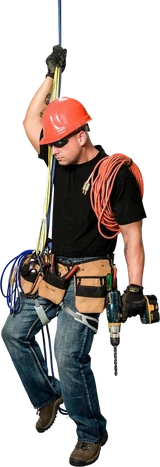
Stage rigging is the job with the tightest schedule at an open-air event: the square is cleared the day before, and the get-out finishes the night after the show. At concert, festival and rally venues, our rigging team builds the stage structure, truss systems and the supports suspended at height.
The equipment is supplied by the organiser or a rental company; we are the team for the installation, the connections at height and the dismantling. During the event, we can also leave a team on standby at the structure.

Stage Rigging: Ground, Structure and Roof
- 1
Ground and deck
The ground is checked for bearing capacity and level, and decks with adjustable legs are brought up to stage height.
- 2
Roof and towers
The roof truss, the supporting towers and the canopy; wind ties are part of the installation.
- 3
Screen and speaker towers
The structure that carries the LED screens and the sound towers. Installing the equipment mounted on it is the responsibility of the company concerned.
The screen supports on a stage rest on the same principle as the LED screen installation we carry out on building facades: first the support, then the modules.
For short events such as rallies and ceremonies, smaller modular platforms that go up quickly are used; the number of people and the installation time shrink accordingly.
Truss Installation and Rigging at Height
The truss is assembled on the ground and raised with chain hoists connected to the rigging points. Technicians who climb up on ropes set these points on the supports in the hall roof or on the stage towers.
The load distribution follows the calculation of the structure’s manufacturer and of the technical manager who prepared the rigging plan. No load is hung outside the points on the plan; a second safety connection is added to every point.
During lifting, all the hoists are run together. If the truss goes out of level, it is stopped and corrected, and only then does it continue to rise.
- Layout and checking of the rigging points
- Connecting the hoists and synchronised lifting
- Safety connections and a final inspection round
Rigging Points in Indoor Arena and Stadium Roofs
The technician moves along the roof truss attached to a rope, fits a steel connection or a load strap to the beam and lowers the hoist hook to this point. Every point is handed over together with a second safety connection.
The position of the points and the load they will carry are determined according to the plan approved by the venue’s technical manager. No load is attached to a beam or to the roof covering that is not in the plan. Photos of the suspension points are handed to the technical manager before the show.
The same method applies on stadium and open-stand roofs; the access route to the roof and the walking line are set together at the site survey.
Build, Show and Get-Out Schedule
- 01
Site handover
The ground, access roads and the material unloading point are seen on site.
- 02
Build
The deck, towers, roof and truss are built in that order, and the rigging points are prepared.
- 03
Rehearsal
While the technical teams settle in, our team stays on site for adjustments at height.
- 04
Event day
Weather and wind are monitored; if necessary the canopy is lowered and the area around the stage is cleared.
- 05
Get-out
After the show, the same team takes the structure down in the reverse order of the build.
On the morning of the build, before the material trucks arrive, the ground is marked out; the deck legs, cable channels and emergency exit routes are positioned according to these markings.
The wind limit of the stage roof is monitored according to the value given by the manufacturer. As well as events in and around Ankara, for festivals in other provinces the team stays at the venue from the build until the end of the get-out.
What Does the Cost of Stage Rigging Depend On?
- The size and height of the stage
- The roof and truss load, and the number of rigging points
- The time allowed for build and get-out; night work
- Travel and accommodation outside the city
- The distance of the material from the venue, and ground conditions
When the team that does the build also takes on the get-out, the team that knows where the parts go finishes the job in less time; night work is shortened accordingly.
Share Your Event Plan
- The date and place of the event, and the time allowed for the build
- The stage drawing, or the equipment list from the rental company
- The rigging plan and load information
- The time allowed for the get-out