Facade renewal · Paint
Facade Painting: Scaffold-Free Work on Tall Buildings
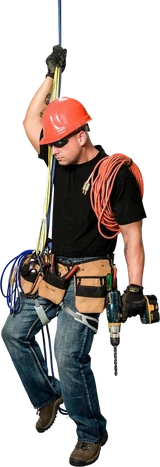
When you paint the outside of a tall building, the biggest cost is usually not the paint but reaching the facade. Our team works on ropes dropped from the roof instead of scaffolding; washing, crack repair, primer and two top coats are all finished on the same descents.
For building and estate management, the job is planned block by block and facade by facade. Residents know in advance which day the team will be working outside which window.

Facade Painting Without Scaffolding: What Rope Access Changes
Painting starts on day one
Instead of waiting for scaffold parts to be delivered and erected, the anchors and descent lines are prepared on the roof, and washing can begin the same day.
Balconies and windows stay clear
There are no scaffold poles on balconies and no protective netting over windows. Residents only close their curtains while the team is on their strip.
Light wells and rear elevations
The back walls and air gaps of terraced buildings are hard to reach with scaffolding and easy to reach on rope.
Touch-ups afterwards
A small flaw found after the job is finished does not mean putting scaffolding up again; we descend to the one spot on the same rope set-up.
Once the rope system is in place, gutter renewal or glass and silicone resealing can be done together with the painting on the same descents, with no separate set-up cost.
As well as apartment blocks and housing estates in Ankara, we work on buildings in other provinces; on jobs outside the city the team stays in the area for the duration of the painting.
Surface Preparation Before Painting
- Pressure washing; removing algae, soot and bird-dropping stains
- Scraping off old paint that is blistering or turning to powder
- Opening up hairline cracks and sealing them with elastic filler
- Renewing crumbling render with repair mortar
- Sanding rusting railings and ironwork and sealing them with anti-rust primer
- Protecting window frames, doors and outdoor units with film
If a crack comes from structural movement, it must be repaired before painting; the details are on our facade crack repair page.

Deciding on Apartment Facade Painting: A Roadmap for Management
- Stage 1
Assessing the condition
Management photographs the blistering, cracks and damp marks on the facade and notes which flats have complained.
- Stage 2
Survey and quote
Written quotes for the same scope are collected from at least two firms. Surface preparation, primer, number of top coats and paint class should be written the same way in every quote.
- Stage 3
Flat owners’ meeting
The quotes, the colour proposal and the payment plan are put to a vote at the owners’ board and entered in the decision book.
- Stage 4
Contract
Scope, start and finish dates, payment stages and touch-up terms are put in writing. Having these headings in the contract reduces disputes later on.
- Stage 5
Notice to residents
A notice goes on the board saying which facade will be painted in which week; a reminder about balcony belongings is given the day before.
How Is a Facade Painted? Layer by Layer
- 1
Washing
The surface is cleaned with pressure water; we wait for it to dry completely before moving on to paint.
- 2
Repair
Cracks are filled and render is repaired; we wait for the repair mortar to harden.
- 3
Primer
One coat is applied; it evens out absorbency and helps the top coat grip the surface.
- 4
First coat
Applied by roller and brush along the strip, leaving no lap marks.
- 5
Second coat
Goes on once the first coat has dried; colour and coverage are completed in this coat.
- 6
Inspection
The strip is checked from top to bottom; any missed spot is closed on the same descent.
Season and Weather: In What Conditions Do We Paint?
What decides when painting happens is the weather, not the calendar month; the suitable period changes from year to year. We build the schedule around the weather forecast, and even in a suitable period the team checks the sky each morning and chooses that day’s work.
Temperature
The air and the wall should be above 5 °C and below 30 °C. On a cold wall the paint film does not form, and in great heat it dries too early.
Humidity and rain
We wait for the surface to dry before and after rain. Painting does not start until the morning dew has lifted.
Wind
We do not work on ropes in strong wind, and the paint spatters too. Windy days are given over to washing and preparation.
Direct sun
On a sunlit facade the paint dries quickly and leaves lap marks. We start on the shaded facade and follow the sun through the day.
Questions Before You Decide on Painting
If you are also thinking about insulation, planning it together with the painting may be more economical; the details are on our external wall insulation page.
How is a facade painted, and in what order does the work go?
First the surface is washed and loose paint is scraped off, and cracks are opened up and filled. Then comes a primer that evens out absorbency, and last two coats of topcoat are applied. We do not move on to the next coat before the drying time of each one has passed; in rushed work the paint blisters within a few years.
Can a facade be painted in winter?
Paint is not applied if the air and wall temperature is below 5 °C, if rain is expected or if the surface is damp. Because when these conditions start and end changes from year to year, we do not give months; in the cold period we do the site survey and set the schedule for the first suitable week according to the weather forecast.
How does the building management decide on painting?
The management first collects site surveys and quotes, and then calls the flat owners’ meeting. At the meeting the colour, budget and payment plan are voted on and entered in the decisions book. In housing complexes a separate decision can be taken for each block, or one decision can cover all the blocks.
How are balconies and windows protected during painting?
The windows and frames of the strip being worked on are covered with film and tape, and balconies are covered over. We ask residents to bring anything on the balcony indoors that day. When the strip is finished, the protection is removed and a check for splashes is made.
Do you choose the paint colour and brand?
The management chooses the colour; we apply the colour code from the manufacturer’s colour chart. We do not sell paint, but in the quote we write which class of paint suits the condition of the surface.
Site survey
Let’s Set a Survey Day for Your Building’s Facade Painting
At the survey we look at the condition of the surface and tell you which class of paint will be enough. If you would like to see in advance which items make up the cost, take a look at our painting labour costs page.